
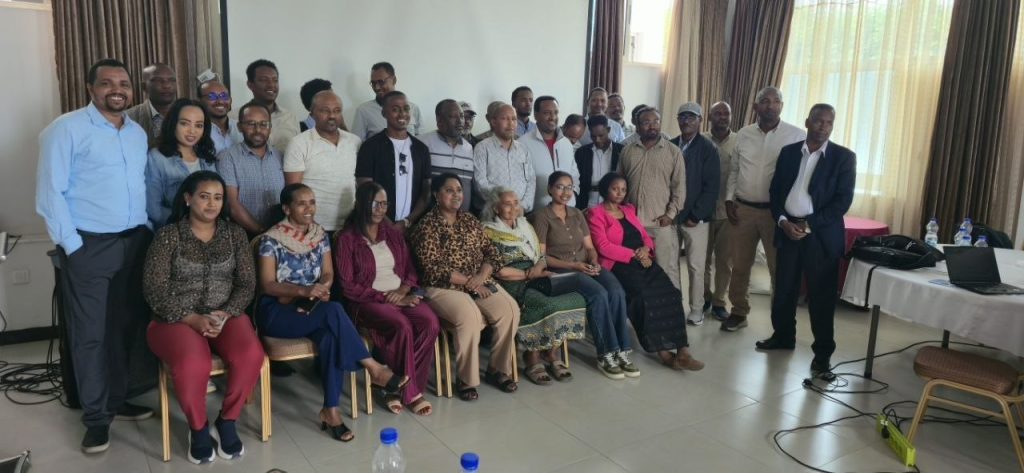
National Adolescents and Youth Health Strategy (2026-2030) Validation Workshop
Strategy document Validated in a 2 days workshop held with the MOH, Regional Health Bureaus, and partners, ready to be disseminated soon-Strategy is Prepared by Hallelujah Consultancy
HALLELUJAH’s experience spans national policy development, costing and economic analysis, implementation research, and system strengthening. Selected examples are summarized below.
The firm’s experience spans national policy development, costing and economic analysis, implementation research, and system strengthening. Selected examples include:
1. National Costed Implementation Planning (Family Planning)
- As lead consultant We provided technical leadership and coordination support for development of the national Adolescent and Youth Health strategy, including evidence review, stakeholder consultations, prioritization of strategic interventions, and facilitation of validation processes. Outputs informed national policy direction, implementation priorities, and partner alignment for AYH programming.
- The Adolescent and Youth Health (AYH) Strategy 2026–2030 provides Ethiopia with an evidence‑based, systems‑oriented framework to address persistent inequities and emerging risks affecting adolescents and youth, who make up over one‑third of the population. Building on past gains and informed by recent EDHS data, the strategy adopts a life‑course and multisectoral approach that integrates health, education, protection, digital, workplace, and humanitarian platforms, prioritizes equitable access to quality, confidential, and youth‑responsive services, strengthens mental health, SRH, nutrition, and GBV care, embeds meaningful youth engagement and accountability, and aligns national action with global commitments to ensure all young people can transition safely and productively into adulthood.
2. Bottleneck Analysis of Social and Behavior Change (SBC) for Family Planning Services (Part of the WHO Global Multi country Assessment)
- As a lead consultant, we provided technical leadership for a national bottleneck analysis of social and behavior change barriers affecting family planning uptake, commissioned by the Ministry of Health, UNFPA, and WHO. The assignment included development of study methodology and tools, coordination of mixed‑methods data collection across five regions, facilitation of national and sub‑national validation workshops, and synthesis of findings into a strategic framework to inform programmatic and policy responses.
- The analysis generated actionable, evidence‑based insights into social norms, behavioral drivers, service‑delivery constraints, and system‑level gaps influencing family planning demand and use. The resulting national SBC framework supports targeted interventions, prioritization of high‑impact strategies, and alignment of partners around a coherent approach to improve equity, quality, and uptake of family planning services across diverse contexts in Ethiopia.
3. Assurance Support for the Implementation Research of the National Effective Vaccine Management (EVM), Temperature Monitoring, and Vaccine Wastage Assessment and CIP Development within Ethiopia’s Immunization System Quality
- As lead Quality Assurance Consultant, we provided technical oversight for the national implementation research assessing Effective Vaccine Management (EVM), vaccine wastage, and temperature monitoring across Ethiopia’s immunization system. The assignment supported the Ministry of Health and partners in generating credible, high‑quality evidence on cold chain performance, vaccine handling practices, and system bottlenecks affecting efficiency, safety, and service continuity at national and sub‑national levels.
- The quality assurance role focused on ensuring methodological rigor, data quality, and compliance with standard operating procedures, including validation of tools, supervision and mentoring of field teams, spot checks, and review of data collection and analysis processes. Findings from the assessment informed corrective actions, priority system‑strengthening interventions, and policy dialogue to improve cold chain reliability, reduce vaccine wastage, and strengthen overall immunization system performance, particularly in hard‑to‑reach and resource‑constrained settings.
4. National Infertility Care and Management Guideline Development
- As national lead consultant, we Led the development of the national infertility care and management guideline through systematic evidence synthesis, technical working group facilitation, drafting, and national validation. The guideline supports standardized, rights‑based, and equitable infertility services within the public health system.
- The National Infertility Guideline for Ethiopia provides the country with its first comprehensive, rights‑based, and evidence‑informed framework to standardize the prevention, diagnosis, management, and referral of infertility within the public health system. Developed by the Ministry of Health through rigorous evidence review and broad multi‑stakeholder consultation, the guideline integrates infertility care into sexual and reproductive health, primary health care, and referral services, addressing medical, psychosocial, and gender dimensions while promoting equity and ethical practice. Dr. Abebe Abadi Dirar, Founder and Managing Director of Hallelujah Strategic Advisory and Consultancy PLC, served as the Principal Consultant, leading the technical development of the guideline and supporting its national validation and finalization.
5. National RMNCH Innovation Prioritization, Costing and Scaleup planning
- As lead consultant, we supported the national prioritization, assessment, and costing of high‑impact Reproductive, Maternal, Newborn, Child, and Adolescent Health (RMNCH) innovations to inform evidence‑based scale‑up decisions within Ethiopia’s health system. The assignment applied a structured and transparent approach combining systematic evidence review, feasibility and readiness assessments, stakeholder consultations, and economic analysis to identify innovations with the greatest potential for impact, affordability, and sustainability at scale.
- Working in partnership with the Ministry of Health, Management Sciences for Health (MSH), and Breakthrough International Consultancy, the work guided national decision‑makers in selecting priority innovations for advancement based on cost‑effectiveness, implementation feasibility, system readiness, and alignment with national RMNCH priorities. The outputs informed national planning, investment decisions, and scale‑up pathways, strengthening the linkage between innovation, financing, and health system capacity to accelerate progress toward equitable RMNCH outcomes.
6. National Costed Implementation Plan for Ethiopia (Family Planning)
- As lead consultant, we provided technical leadership for the development of Ethiopia’s multi‑year National Family Planning Costed Implementation Plan (CIP), supporting the Ministry of Health and partners to translate policy priorities into a fully costed, evidence‑based investment roadmap. The assignment included the design of the costing methodology and tools, comprehensive review of programmatic and financial data, and coordination of multi‑institutional stakeholder consultations involving government entities, UN agencies, and implementing partners.
- The work culminated in national validation workshops and a finalized costed plan that informed financing strategies, prioritization of high‑impact interventions, and alignment with global commitments, including FP2030. The CIP strengthened coherence between policy, planning, and budgeting, and provided a practical framework to guide resource mobilization, partner alignment, and scale‑up of equitable, high‑quality family planning services across Ethiopia.
7. National Financial Bottleneck Analysis for COVID‑19 Vaccine Delivery, Diagnostics, and Therapeutics in Ethiopia
- As national public health consultant and focal point for BMGF Global and ERS Global (A Geneva-Based Consulting), we have led a phased national financial bottleneck analysis to assess public health financing flows and constraints affecting COVID‑19 vaccine delivery, diagnostics, and therapeutics in Ethiopia in collaboration with MOH, BMGF, and ERS Global during the emergency response period. The work was implemented in two sequential phases:
- Phase I focused on financial flow analysis for COVID‑19 vaccine delivery,
- Phase II examined financing mechanisms for diagnostics and therapeutics.
- Together, the two phases spanned 18 months and covered seven regional states and two city administrations (Addis Ababa and Dire Dawa).
- The assignment applied a mixed‑methods approach, combining desk reviews, situational analysis, quantitative expenditure tracking, and qualitative stakeholder consultations at national and sub‑national levels. The analysis generated actionable, evidence‑based recommendations to improve efficiency, equity, and transparency in public health financing under emergency conditions, and informed policy dialogue on strengthening financial governance, coordination, and responsiveness for future health shocks and pandemics.
8. National Adolescent and Youth Health Services at Workplaces in Ethiopia (National Policy Document)
- We have developed The national document in collaboration withthe Ministry of Health and CORHA, in partnership with Hallelujah Strategic Advisory and Consultancy PLC, through evidence review, multi‑sectoral stakeholder consultations, and national validation processes. It provides standardized guidance for integrating youth‑responsive SRH, mental health and psychosocial support, GBV prevention and response, occupational safety and health linkages, and referral systems into workplace settings, including industrial parks and high‑mobility labor environments.
- The National Adolescent and Youth Health (AYH) Services at Workplaces Policy/Minimum Service Package is an officially endorsed national policy instrument of the Ministry of Health (MoH), Ethiopia, developed to address the health, protection, and wellbeing needs of adolescents and youth engaged in formal and informal employment settings. Following its endorsement, the policy is being used nationally by federal and regional health authorities, relevant sector ministries, and implementing partners as a national strategy to guide planning, implementation, and monitoring of workplace‑based AYH services.
- The document strengthens coherence between health, labor, and social sectors and supports equitable access to quality services for young workers, particularly young women, in line with Ethiopia’s broader AYH and RMNCAH policy framework.
9. Monitoring, Evaluation & Integrated Supportive Supervision-ISS
- Support the ministry of health and regional health bureaus in designing and implementation of Monitoring, Evaluation, Accountability, and Learning (MEAL) frameworks alongside Integrated Supportive Supervision (ISS) systems to strengthen performance, quality, and adaptive management of government and partner‑supported health programs in Ethiopia. The work focused on establishing results frameworks, indicators, data quality assurance mechanisms, and structured supervision tools that link routine monitoring with continuous quality improvement at facility, woreda, and regional levels.
- In close partnership with the Ministry of Health, Regional Health Bureaus, and city administrations, Hallelujah conducted regular annual ISS exercises across multiple regions, combining joint supervision, on‑the‑job mentoring, performance review, and problem‑solving with frontline teams and managers. These ISS processes strengthened data use for decision‑making, improved service quality and compliance with national standards, enhanced coordination between levels of the health system, and supported timely corrective actions, contributing to sustained improvements in program implementation and accountability.